Categories

All
Stone Brew Day: The making of Stone Beer 2026

Stone Beer is back! Brewed using one of brewing's oldest traditions, Stone Beer 2026 is a rich porter made with wood-fired stones, delivering layers of roasted malt, dark chocolate, coffee and subtle smoke.

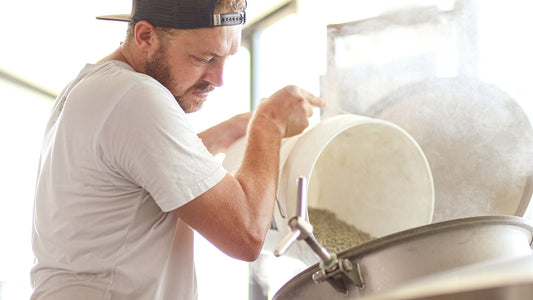
In mid May, we gathered in the brewery for one of our favourite annual rituals: Stone Brew Day. Heated over a wood fire before being lowered into the brew, the stones caramelise the malt, creating the rich, distinctive flavour that makes Stone Beer what it is.

Brewed just once a year and worth the wait. Stone Beer is available soon online, in our Byron Bay Tasting Room and at select bottle shops.


Reading times: 2 mins

Stone Brew Day: The making of Stone Beer 2026

Stone Brew Day is our annual winter ritual which is a gathering of community to brew Stone Beer - a dark and decadent porter.

Read story
Blackwood Collective: An Eye for Detail

Meet the craftsman who handmade the furniture for our Brisbane brewery

Feat. Gareth from Blackwood Collective

Besides the 100-year-old exposed beams and several shiny tanks behind the bar, one of the first things you might notice at our new brewery in Brisbane are the tables and chairs.

Crafted with mixed hardwood and black metal frames, we think the furniture’s striking lines and natural timber tones complement the brewery’s urban-industrial interior and make for beautiful drinking surfaces.

 For this, we have Gareth Robertson from Blackwood Collective in Brisbane to thank.

With a keen eye for detail, carpenter and furniture designer Gareth runs his bespoke furniture workshop Blackwood Collective out of Stafford, Brisbane, and specialises in carpentry and joinery. Gareth’s approach champions functionality, aesthetics and both classic and modern techniques, while his work captures his experience in high-end renovations and a creativity honed through world travel.

The name Blackwood Collective pays homage to Gareth’s favourite timber, Tasmanian Blackwood. A proud Indigenous man, Gareth prizes Blackwood for its traditional uses by Indigenous peoples as boomerangs, spear throws, clap sticks and other tools.

Check out of Gareth’s work @blackwoodcollective and next time you’re in the brewery, be sure to enjoy his pieces.  

Footage and photos by: @andymck

Reading times: 2 mins

Blackwood Collective: An Eye for Detail

Meet the craftsman who handmade the furniture for our Brisbane brewery

Read story
Stone & Wood Brewing Process

We brew beer that's simply good to drink...

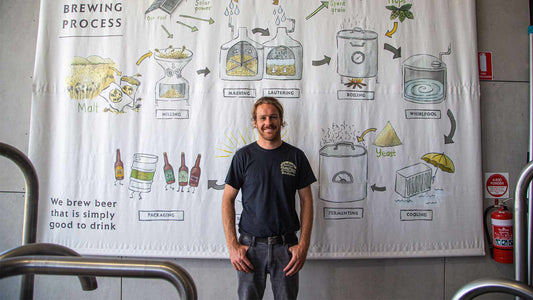
HOW WE BREW OUR BEER

BEER OVERVIEW

The basic ingredients of beer are water; a starch source, such as malted barley, able to be fermented (converted into alcohol); a brewer’s yeast to produce the fermentation; and a flavouring, such as hops, to offset the sweetness of the malt. A mixture of starch sources may be used, with a secondary saccharide, such as maize (corn), rice, or sugar, often being termed an adjunct, especially when used as a lower-cost substitute for malted barley.

MILLING

The malted barley and most other cereal grains must be crushed to expose the starch inside, enabling the solubilization in hot water of the endosperm of the grain. Milling is generally carried out in such a way as to avoid damaging the husk of the barley malt. This is because the husk contains several components detrimental to beer quality, but mainly because the husk acts as a filtration medium during the wort separation process. The resulting crushed malt is known as grist.

MASHING

The grist is blended together with hot water (sometimes known as “brewing liquor”) in a mash vessel, creating a porridge called the mash. In a modern brewery the mash vessel will be jacketed, steam heated, and fitted with a stirring apparatus. The standard “optima” for enzymatic conversion of malt starches is approximately 65°C. Most of the enzyme action responsible for breaking barley starch down into fermentable and nonfermentable sugars ceases early during wort collection. Either the mash will be heated to a temperature that denatures the enzymes (this is called “mash-off” at approximately 76.5°C) or sparging (rinsing) at similar temperatures will accomplish the same goal. Any enzymes that remain active will later be denatured by heat in the kettle.

Once the endosperm of the barley is solubilized into sugars, then the wort must be recovered from the spent grains. The entire mash is transferred to a lauter tun, which is a specialized vessel designed to optimize the conditions for wort separation. It is essentially a large sieve that holds grain husk in place while the wort is rinsed away into the kettle. The separated spent grain is usually sold as cattle feed.

BOILING

Once the wort is collected from the spent grains, it must be boiled. Boiling leads to the isomerization and subsequent solubilization of the bitter substance alpha acid from the added hops. Boiling the wort also essentially sterilises it, rendering it free from any bacterial contamination. Boiling completely ceases the enzyme activity and fixes the carbohydrate composition of the wort and hence the dextrin content of the final beer. These compounds form a solid precipitate called “trub,” which is removed from the wort prior to fermentation.

WHIRLPOOL AND WORT COOLING

The small particles such as spent hop pellets and precipitated protein are separated using a vessel known as a whirlpool. The whirlpool works by pumping the wort into the vessel using a tangential inlet pipe about one-third of the way up the side of the vessel. This causes the wort to spin, and the forces acting in the rotating liquid cause solid particles to collect in a mound in the middle of the vessel bottom. Clear wort can then be drawn from an outlet close to the edge of the vessel bottom.

The wort is chilled prior to adding yeast for fermentation by passing the wort through a heat exchanger which uses cold water to chill the hot wort down to temperatures suitable for the addition of yeast. In the case of ales, that temperature is usually between 15°C and 20°C, whereas for lager styles it will regularly be as cold as 7°C to 14°C.

FERMENTATION

Fermentation is the process whereby “sugars” are converted by yeast to alcohol, carbon dioxide, and heat. In the brewing of most traditional beer, the sugars are derived mainly from malted barley, although other cereal sources and other plant sugars can also be used. These materials also contribute proteinaceous substances, which in concert with the sugars and added flavouring agents, notably hops, generate the alcohol, flavours, and aromas that we know and love as beer.

The fermentation temperature is critical in controlling the outcome of fermentation and has a significant impact on the development of flavour. Ales are generally fermented in the temperature range of 16°C to 22°C using top-fermenting strains, whereas lagers are fermented much cooler, 7°C–14°C, using bottom-fermenting strains. Some beers, particularly Belgian styles, may be fermented very warm, with temperatures reaching almost 32°C for some farmhouse ales (saison).  The combination of specific yeast strains and temperature generates very distinctive flavour profiles in the beers, with the ales and particularly stouts generally producing fruity/estery characters, whereas the lagers feature much lower ester levels, enabling more of the delicate pale malt characters and hop aromas to manifest on the nose. Fermentation is an exothermic process in that heat is produced and control of the heat generated is essential in fermentation control. Brewing vessels are equipped with cooling equipment of varying levels of sophistication, designed to effect cooling at the appropriate times in fermentation. Cooling is important in moderating yeast flocculation in that it tends to encourage yeast to flocculate. This is necessary at the end of fermentation to facilitate yeast separation.

DRY HOPPING

Dry Hopping, the addition of hops to beer in the fermenting, conditioning, or serving vessel. For many styles of beer, hops are added throughout the brewing process. The purpose of dry hopping is to infuse beer with additional fresh hop flavour and aroma. Dry hopping is a cold infusion technique that not only intensifies hop aromatics in beer but also adds aromatics that are substantially different from those achieved by late hopping. international bitterness unit values may remain unchanged.

MATURATION

Maturation includes all transformations between the end of primary fermentation and the removal of yeast from the beer in preparation for packaging. Although most beer fermentations are technically complete within 3 to 10 days, the vast majority of beers are not yet ready to drink when the yeast finishes its primary work of metabolizing sugars. This is because fermentations tend to produce flavours that are considered undesirable in finished beer. For this reason, beer must undergo some form of maturation to become palatable. Maturation is also referred to variously as conditioning, lagering, and ageing.

CENTRIFUGE

In a brewery centrifuge, which may also be called a separator or a decanter, these same principles are applied to a liquid — wort or beer. The liquid is laden with various types of suspended particulate, including yeast, trub, and hop residue, each with a different density. When a centrifuge spins the liquid within a round chamber, at a given rotation speed, eventually the heavier components of the liquid, notably trub and yeast, because they experience greater centrifugal forces, will move closer to the chamber’s outer wall. Meanwhile, the lightest components, including water and alcohol, will stay closer to the centre axis of the rotation chamber.

A beer centrifuge employed before packaging can reduce the beer’s turbidity by separating many or most of the yeast cells from the clear beer. This is particularly useful if the beer is to be packaged unfiltered, but the yeast does not flocculate sufficiently to the bottom of the fermenter. It is possible to link the centrifuge to an optical sensor that measures the turbidity of the beer; properly used, this setup can be used to adjust haze or yeast cell counts in the final package. Likewise, a centrifuge can remove some of the yeast between the end of primary fermentation and the beginning of secondary fermentation or before lagering.

BRIGHT BEER TANK

A Bright Tank is a dish-bottomed pressure-rated temperature-controlled tank used to hold beer in preparation for packaging. The term “bright” refers to “bright beer,” beer that has been rendered bright (clear) by filtration, centrifugation, fining, and/or maturation. In most breweries, beer will be filtered after leaving a uni-tank or lagering vessel and be directed into a bright tank. If the beer is to be force-carbonated, then the beer may be carbonated in-line, under pressure, between the fermenter or lagering tank and the bright tank. In this case, the beer should arrive at the bright tank with full carbonation. For in-tank carbonation (or adjustments), the bright tank will be fitted with a carbonation stone, a device through which carbon dioxide is forced, dispersing fine bubbles into the liquid for fast dissolution.

PACKAGING

The bottles and cans are then fed into the filler, a large rotary device connecting the bottles to the bowl containing the beer ready for filling. But before beer is filled into the bottles, the air is sucked out of them to remove the harmful oxygen. This may happen either once or twice — single or double pre-evacuation — which is always followed by a pre-pressurisation with pure CO2 that serves to both provide a “beer friendly” atmosphere in the bottles and aligns the pressure in the bottle with the one in the tank, making sure that the subsequent filling can take place without the beer foaming. When the bottles are full, they enter the rotary capper where caps/crown are applied to the bottle mouths and squeezed tightly onto them.

Draught Beer. Beer racked into kegs and served on draught is generally considered to be the optimal method to showcase the brewer’s art.

Modern single-valve stainless kegs — coupled with state-of-the-art cleaning and filling systems — allows beer to be aseptically packaged with very little oxygen pickup or ingress. The stainless keg eliminates degradation from light, as well as potential oxygen ingress through bottle cap seals or flavor influence from can liners that is possible with other beverage packaging methods. When dispensed through a properly maintained and balanced draught system, this allows for optimal brewery-fresh beer to be delivered to the glass. Although draught beer has the potential to deliver the best drinking experience, it can easily be ruined with improper storage and handling through a poorly designed or poorly maintained dispensing system or improperly cleaned glassware.

Reading times: 2 mins

Stone & Wood Brewing Process

We brew beer that's simply good to drink...

Read story
So Long Darkness..? Is Now Available

Check where to find the beer near you

Let there be light– our So Long Darkness..? has left our brewery gates on its way to select venues and bottle shops around the country.

Not all is what it seems with So Long Darkness..?, our ‘invisible’ stout.

Eyes closed, the generous hints of roasted coffee, chocolate and creaminess found in So Long Darkness..? might have you think it were a regular stout. But upon pouring, the way the light shines through this pale liquid might surprise you like an optical illusion. This is, in fact, not a dark beer at all.

The beer’s stout flavours and aromas come through the addition of 45kg of whole unmilled coffee (post-fermentation), 35kg cacao nibs (post-fermentation), 400kg of lactose (kettle) and 15kg of vanilla beans (post fermentation), while the pale malt, wheat and oat backbone of So Long Darkness..? produces the beer’s ‘invisible’ colour.

Alongside the roasted coffee and chocolatey flavours, So Long Darkness..? is smooth and creamy on the palate, thanks in particular to the oats, balanced with the brightness of Galaxy hops.

Available in packs of two 500ml cans at good bottle shops and our online store ($17.50 + shipping), and tapped at select venues, check where to taste or purchase So Long Darkness..? with our Beer Finder or buy now here.

Importantly, we recommend calling your local to check when their stock has landed, as timings will vary depending where you are in the country.

Like all Counter Culture releases, So Long Darkness..? is super limited and will make way for the following release in roughly eight weeks’ time. Embrace the light and look for yours now.   

To get across our Counter Culture releases, sign up to the newsletter and follow the range at @counterculturebeer.

Reading times: 2 mins

So Long Darkness..? Is Now Available

Check where to find the beer near you

Read story
Meet The Brewer: Dare Ahern

Our resident Byron brewer for August - October..

Our Pilot Batch beers are experimental brews created by our team of brewers, with occasional help from collaborators within our community, all at our Pilot Brewery in Byron Bay.

These small batch brews are special, limited and, once gone, may never return. The Pilot Batch brewery is a space for our brewers to get creative – an opportunity to trial weird and wonderful things, turning the brewery into an experimental playground to get a little fruity.

Every three months, one of our brewers takes up the helm in our Byron brewery, running the day-to-day operations. During this time, they have the chance to brew their favourite beers and run the Pilot Batch program.

Meet Dare Ahern, our resident brewer for August – October.

Give us a bit of background about yourself…

I stumbled into brewing by accident really, two and a half years ago. I’ve always been a fan of craft beer but never saw myself ever making it. After making a move three years ago to the Northern Rivers from South Gippsland where I grew up, I got a job on the packaging line in our Murwillumbah brewery part-time. After a month of bottling and kegging, I had the opportunity to work down at our old Byron brewery (4 Boronia Place).  After spending a summer learning all I could about brewing, I got a call offering me a brewing position in Murwillumbah. Two a half years on, I’m down in Byron again – at the new brewery – for my residency on the Pilot Batch brewery.  

What are your favourite styles of beer and why?

There aren’t any styles of beer I don’t like, but I am partial to the malt-driven styles of beer e.g. lagers, porters and stouts. 

Any beers you’re really excited about brewing and why?

I’m excited about whatever I’m brewing at the time. I’m hoping to keep brewing anything and everything to keep my education going.

What do you like about using the Pilot Batch brewery to experiment?

It’s super cute.

Reading times: 2 mins

Meet The Brewer: Dare Ahern

Our resident Byron brewer for August - October..

Read story
Using Beer as a Force for Good

How we work and grow sustainably with our communities

While some companies of yesterday give business a bad name, we believe that in 2019 and beyond we can use business – and beer – as a force for good. We believe it’s our responsibility, like all good businesses, to work for more than profit alone.

What is a good business, then? In fact, in the world of brewing, what is good beer?

For us, ‘good’ means more than the taste of our beer or the quality of the experience at our Tasting Room; it reflects how we fulfil our role as the local brewer and add value to our communities – it encapsulates our whole approach to business.

Some time ago, to help guide this approach, we created something called the Stone & Wood Wheel, a stakeholder model that represents all of the communities that relate to our business and how we work with these in mind. We consider this Wheel our compass that guides us toward true north.

Looking ahead after ten years of Stone & Wood, we thought we’d take the opportunity to share with you something we’ve put together: the ‘Beer as a Force for Good’ Report.

Brief and easy-to-read, the ‘Beer as a Force for Good’ Report captures some of the achievements we’re proud of and how our different communities have helped us reach them – including you, our drinkers.

Whether you’re here for a quick scan or keen to dive deeper into what makes Stone & Wood the way we are, this report is a way of keeping you up-to-date. Thanks for your time and happy reading! Cheers.


Reading times: 2 mins

Using Beer as a Force for Good

How we work and grow sustainably with our communities

Read story
We have your Father’s Day Gifts Sorted

Jump on these awesome beer gift bundles for Dad

It’s getting close – that special Sunday that starts with a sleep-in, smells like brand new socks and stretches long into the afternoon with beers and a backyard barbecue.

That’s right, Father’s Day is coming up on Sunday 6 September, and this year we’ve made gifting Dad easier than ever by brewing and bundling great beery gift packs right here in our brewery.

Lager-Loving Dad Bundle | $50

  • Six-pack of Green Coast Lager
  • Pair of Green Coast Lager socks
  • Stone & Wood coldie holdie – made from sustainably sourced wetsuit offcuts!

Dad’s Pub in a Box | $99

  • Any Stone & Wood carton
  • Two-pack of Stone & Wood glassware
  • A Stone & Wood bar mat
  • 75g bag of Brookfarm Entertainer Brothers Blend nuts

An extra little something

  • Add a six-pack of Green Coast Lager to any carton purchased for $10 | 50% off its usual price
  • Add a Stone & Wood cap to any carton purchased for $15 | 50% off its usual price

Beer Club Membership

  • Six-month Beer Club membership | $90
    • Beer Club Welcome Pack
    • Three limited releases
    • Exclusive video content and beer news

  • Ongoing Beer Club membership | $15 per month
    • Beer Club Welcome Pack
    • Limited release beers six times a year
    • Exclusive video content and beer news throughout the year

Our Father’s Day bundles are limited, so grab yours today and guarantee delivery in time for Sunday 6 September!

Cheers to all the dads, carers, grandfathers and single mums out there, and a big shout-out to those at Stone & Wood, too – we couldn’t do it without you guys!

Thanks for supporting independent Australian brewing this Father’s Day.

Reading times: 2 mins

We have your Father’s Day Gifts Sorted

Jump on these awesome beer gift bundles for Dad

Read story
Spend the day as a Stone & Wood Brewer!

Introducing our new one-day immersive Stone & Wood Brew Experience

EXPERIENCE NO LONGER AVAILABLE

In our experience, there those who enjoy a good beer – and then there are those who want to dive head-first into beer education, history and brewing. It’s no surprise to us that many of our drinkers sit within this second category!

Well, we have great news for you guys: you now have the opportunity to get your hands dirty behind the scenes at our brewery in Byron Bay!

The Stone & Wood Brew Experience is an all-day immersion that invites those seeking a deeper understanding of beer and the brewing industry to an all-inclusive day of brewing a Stone & Wood all-year or one of our Pilot Batch beers.

 With groups limited to four pax and guided by two of our crew members, participants also enjoy a brewery tour, Cicerone-guided sensory training, tastings poured straight from the tank and casual information sessions on our story and approach to conscious business.

Besides the hands-on brewing activities, packages include transfer from Byron Bay CBD, breakfast, lunch at the brewery’s canteen, beers throughout the day and a pub crawl through Byron town, plus an exclusive merch pack when you finish up.

Priced at $350 per person, the Stone & Wood Brew Experience will run every fortnight from Thursday 5 September – a good idea for Father’s Day coming up (nudge, nudge).

Tickets are on sale now here! Give us a call if you’re interested in any more information on (02) 6685 5173.

Cheers!

Reading times: 2 mins

Spend the day as a Stone & Wood Brewer!

Introducing our new one-day immersive Stone & Wood Brew Experience

Read story
French Toast Stout? It’d Be Rude Not To

Isn’t it time you treated yourself?

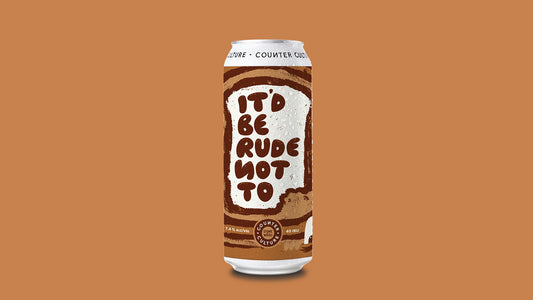
Prepare to salivate. Our delectable French toast stout, It’d Be Rude Not To is the third release of our limited Counter Culture range – and a beer for those times you just can’t refuse.

Dark, decadent and oozing with patisserie goodness, we admit It’d Be Rude Not To is a little bit naughty …

The beer

Picture the breakfast of your dreams. A plate of fluffy French toast – crisp around the edges– topped with vanilla ice-cream and dusted with cinnamon beneath a cascade of maple syrup. This is It’d Be Rude Not To territory.

Pouring dark brown with a generous caramel head, this imperial milk stout unfolds in pastry flavours with every sip. Packed with a tonne of lactose, a tonne of maple syrup, 10 kilograms of vanilla beans and five kilograms of cinnamon, the beer’s unquestionable sweetness is matched by a toasty malt backbone and balanced with Galaxy hops.

Creamy, velvety, It’d Be Rude Not To simply begs for a #cheatday.

7.4% alc/vol

40 IBU

The national launch

Things can never get too sweet in Byron Bay, so we’re launching our third Counter Culture beer here at home with a delicious launch party at Three Blue Ducks, The Farm, on Friday 26 July.

The party will feature:

  • It’d Be Rude Not To flowing on tap
  • Savoury snacks by Locura Kitchen
  • Pastry treats by The Bread Social
  • Live music by Tim Stokes and Dan Hannaford
  • Our Barrel Aged Stone Beer and Coffee Milk Stout (Pilot Batch brew) on tap
  • Pacific Ale ad Garden Ale cans
  • A selection of wine from Three Blue Ducks

Tickets are free but spots are limited, so be quick to grab you and your friends a spot!

Availability

Like all the limited-release beers in the Counter Culture range, It’d Be Rude Not To will be sold in packs of two 500ml cans online, as well in bottle shops and on tap at our brewery in Byron Bay – but is super limited volumes.

Keep an eye on our blog and socials on Monday 29 July when the stockist listing goes live.

And remember, after eight weeks, It’d Be Rude Not To will make way for a different Counter Culture beer and disappear.

For news and updates about the Counter Culture range, and to purchase an It’d Be Rude Not To pack, stay tuned via the Counter Culture instagram and mailing list.

Reading times: 2 mins

French Toast Stout? It’d Be Rude Not To

Isn’t it time you treated yourself?

Read story
Strawberries & Cream Berliner

Now pouring through the taps at our tasting room...

Most of us know and love those soft, little, red and white lollies called ‘strawberries & cream’. A lolly that our packaging crew member Brendan wanted to translate into liquid format.

An avid homebrewer, Brendan first dropped the beer at our 2018 company Christmas Party on a warm December afternoon. As it flowed from the taps, the colour, aroma and balance of the beer took everyone by surprise. It was an instant success.

Since then, Brendo has brewed it a couple more times to prove that it wasn’t a fluke and leading up to a scheduled bigger brew at the Byron pilot brewery, everything was looking good! However, due to the colder temperatures lately and change in equipment, the late souring method just wasn’t working. So, the crew tweaked the brew sheet and opted for a kettle sour instead.

The result? Another delectable beer from the Pilot Batch brewery. Our Strawberry & Cream Berliner pours with a light pink hue and bursts with strawberry aromas and flavours. Wheat malt and lactose adds a pillowy mouth feel and kettle souring brings a rounded finish. This beer has plenty of layers and is worth driving miles to our tasting room for a sampling.

4.2% Alc/Vol

Brendo in action on the brew deck brewing his crowd favourite Strawberries & Cream Berliner.

Reading times: 2 mins

Strawberries & Cream Berliner

Now pouring through the taps at our tasting room...

Read story
Meet The Brewer: Jess Geranio
Reading times: 2 mins

Meet The Brewer: Jess Geranio

Our resident Byron brewer for June-August...

Read story
You have viewed 10 of 287 journals
Sustainability
If you want the freshest news to froth over
Join our email community to be the first to hear about all the good stuff happening at Stone & Wood.